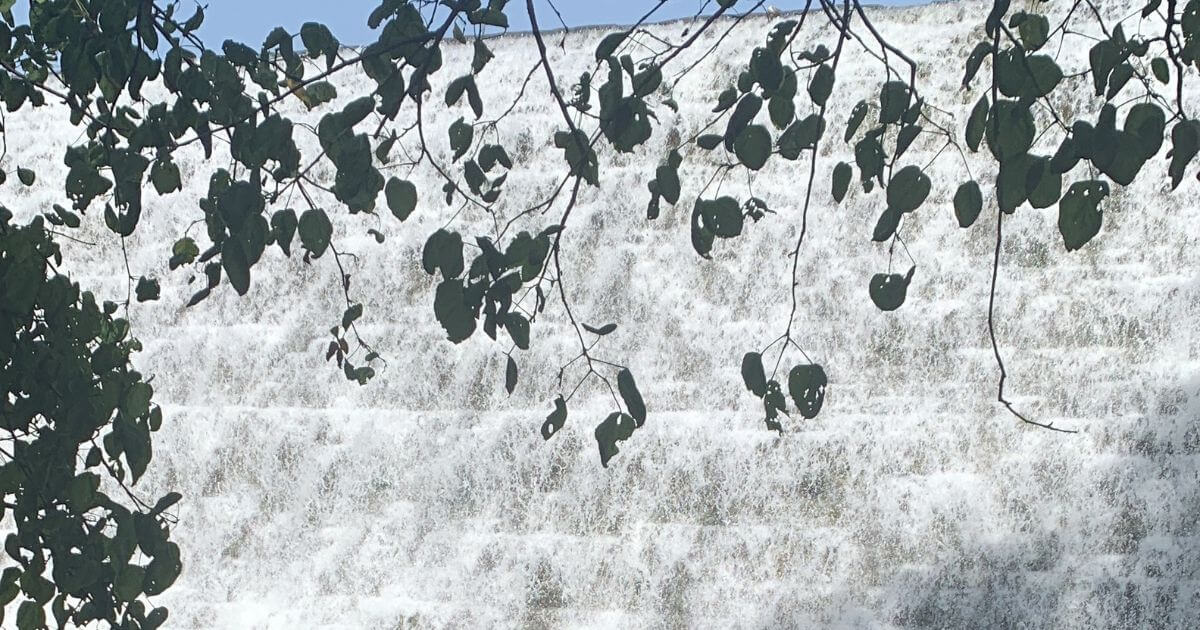
Various groups across the state regularly test Iowa's waterways. Results lately haven't been good.
In Central Iowa, for example, a two-year study undertaken by Polk County wrapped up this summer. It noted that "poor source-water quality" along with "heightened demand" were putting a strain on drinking water for people living in the area.
The culprit? Ag pollution.
"The Rivers often contain some of the highest nitrate levels in the US," the report said, far higher than the safe drinking water standard. "Emergent research suggests ingesting levels of nitrate even below the current drinking water standard can pose health risks."
How bad water contributes to cancer
High nitrates don’t just lead to more E. coli in lakes—they can also affect our bodies. One insidious concern is cancer.
Studies have shown that people who consume nitrates in their drinking water, especially alongside a higher intake of meat, face increased risks of colon, kidney, and stomach cancers. There’s also some evidence linking higher nitrate intake to a greater risk of thyroid cancer and ovarian cancer in women.
The risks are even greater for Black Iowans and people who live near factory farms (known as concentrated animal feeding operations or CAFOs) and row cropping operations.
In other words, living in Iowa's rural areas carries as high of a cancer risk as smoking. Poor water quality, therefore, is a major contributor to Iowa having the nation’s second-highest rate of new cancer cases for the second year in a row, per the Iowa Cancer Registry.
What's being done?
Des Moines Water Works is charged with turning this nitrate-laden water into something the EPA deems safe enough for human consumption. In 1990, they built a special nitrate removal facility to run on an as-needed basis. But it only has capacity for about an eighth of the water Des Moines needs.
After days of extremely high nitrate readings from both rivers in early summer, Water Works started asking people to voluntarily stop watering their lawns. On June 12, they banned it entirely. (As of this writing, Iowa's largest metro area is still on a partial watering ban.)
Water Works officials said they hope to solve the problem with two new cleaning facilities at a cost of $344 million, borne by taxpayers.
"It's time we call that $344 million what it really is: One more government subsidy for Iowa Agriculture," said Chris Jones on his Substack.
'It's going to take laws'
Jones knows the scale of the problem because he's studied it his whole life. He even wrote the definitive book on Iowa's water quality problem, "The Swine Republic," in 2023. Its conclusion was similar to Polk County's recent water report: Iowa's increased agriculture production, CAFOs, and decreased crop diversity (we either grow corn or beans) is all taking a heavy toll on Iowa's environment.
"It's important for people to understand that this is a colossal problem," Jones told Iowa Starting Line. "We only have 3.3% of the land in the Missouri River basin, Iowa does, and we contribute 55% of the nitrate."
Voluntary conservation over regulation—favored by Iowa's elected officials at lobbyists' insistence—clearly isn't working, he said. Problems like what Water Works is experiencing are getting worse, in fact.
"That's the one thing I try to impress upon people," he said. "When you've got a problem of this scale, individual actions are not going to cut the mustard. It's going to take government policy. It's going to take laws."
Politicians aren't interested
Critics say the Iowa Department of Natural Resources has failed to step up. The Iowa Legislature, dominated by Republicans for nearly a decade, has passed no new regulations to try and shore up water quality. Meanwhile, Gov. Kim Reynolds prefers to pivot, blaming increased nitrates on drought and rain cycles.
Iowa's congressional senators and representatives, all Republicans, cheered rolling back protections for Iowa's few remaining wetlands, which the Iowa Environmental Council points out is a vital resource that helps filter groundwater—and groundwater is used for drinking water in many of Iowa's rural areas.
And President Donald Trump has axed research attempting to decrease our reliance on nitrogen fertilizer, among many other federal science and research cuts.
In short: Nobody who leads our state or has the power to influence our political leaders appears to want to do anything about the problem.
"We subsidize row crop agriculture through a variety of means and animal agriculture through our tax dollars. Then, we're also asked to spend our tax dollars to clean up the pollution," Jones said. "It's just stupid. You cannot find another example of this throughout the US economy."
What you can do
You can test your own drinking water and find out for yourself how high your nitrates are.
Drinking water tests: Iowa Starting Line is offering free nitrate test strips to readers who request one through this form. We only ask that you take a photo or video of your drinking water reading and share that with us.
Recreational water tests: Request one from The Izaak Walton League, who will send you a free kit if you take a Nitrate Watch pledge (and according to their nitrate map, Iowans in particular have been taking advantage of this service).
You can also lobby your elected representatives to do something about it.
"Who's benefiting? Well, of course it's the big corporations and the oligarchs," Jones said. "And we end up suffering from the pollution."